

The Questions That Drive Me

How does the brain make sense of our multifaceted sensory environment?
We are constantly bombarded by a multitude of sensory signals from our surroundings. Consider, for example, the signals derived when you take a bite to eat. This seemingly trivial experience brings with it a multiplicity of sensory signals such as the scent, taste, temperature, and texture of the food.
During such an experience, our brain processes, combines, and contextualizes these distinct streams of sensory information to construct our perception of the environment (ie, the food you’re eating).
What enables neural flexibility?
The choices we make are continually biased by our ongoing internal and external needs.
What are the molecular, neural, & circuit substrates that promote flexible sensory processing and integration?
What are the general principles of operation & modulation of sensory processing and integration?
What aspects of function and neuromodulation of sensory processing & integration are shared across all nervous systems?
Have different nervous systems converged upon similar solutions?
What unique divergences have arisen across evolutionary time?
I use multiple levels of analysis, from synapses and circuits through behavior, to determine the molecular mechanisms underlying the answers to these questions.
Neuroanatomy
Knowing which and what types of neurons constitute a circuit is the foundation to achieving a circuits-level understanding of a neurobiological phenomenon.
To build these types of "roadmaps", I use immunohistochemistry, clonal analysis, and electron microscopy ("connectomics").


Molecular biology
My research is question-driven, and if the right tools aren't currently available to answer those questions then I'll make them.
Whether it's creating novel transgenic animals, qPCR, quantitative Western blots, etc., I frequently use molecular biology methods to answer questions about neural circuit function. Here (see left image), are three such examples of a Gal4 knock-in driver (top left inset), a cell-specific knockout line wherein every neuron in magenta lacks 5-HT1A (top right inset), and quantitative Western blots comparing synaptotagmin-1 levels in 2 distinct treatment groups (bottom half).
Neurophysiology
How do sensory neurons and their downstream partners respond to sensory signals? How does the activity of one set of neurons influence the activity of another? How does the expression of a given gene within a neuron influence how that neuron responds to sensory signals?
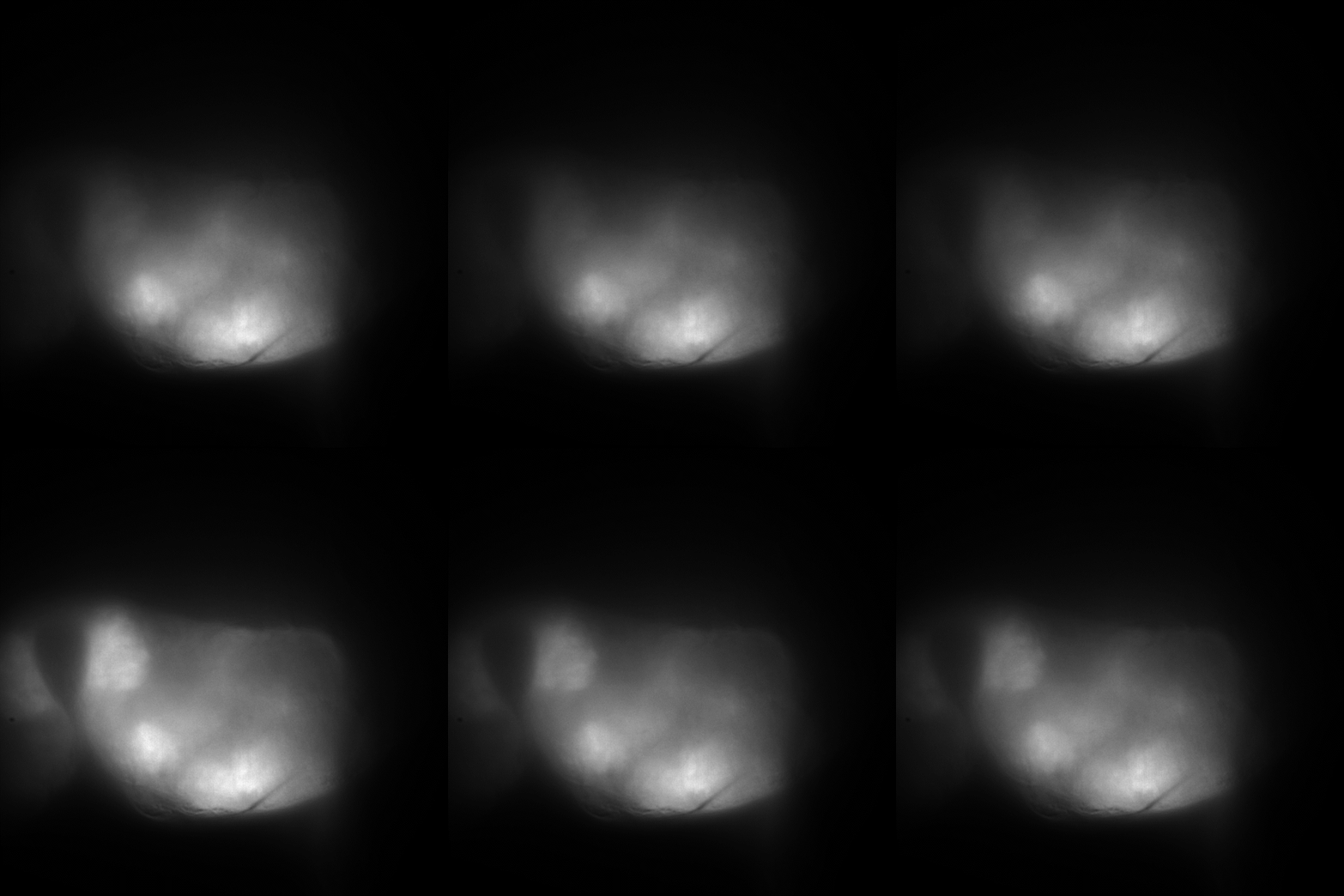
I use live imaging (in vivo & ex vivo) methods to measure stimulus-evoked changes in neuronal calcium & voltage to answer such questions.
In this video, you can see several populations of the fly's olfactory receptor neurons (ORNs) activated by briefly exposing the fly to the scent of apple cider vinegar.

Quantitative behavior
Like the sentiments expressed by Dobzhansky's maxim that "nothing in neuroscience makes sense except in the light of behavior", I believe the greatest neurobiological discoveries begin from simply watching the animal.
I combine high- and low-throughput behavioral paradigms, analytical instruments, and machine learning to break down and understand complex behaviors and their neurobiological origins.
And, like with molecular tools, if the right behavioral paradigm doesn't exist for the question then I'll develop a new one that does -- more on this coming soon :).
Insects are Cool
There are ~30 million insect species in the world. That means the majority of nervous systems in the world are likely those of the insects!
While the majority of my research is done using Drosophila, I am interested in the generalizable principles of nervous system function and so frequently study the brains of other invertebrate creatures whenever possible (like the antennal lobe of this Mud dauber wasp - see left inset).


